How to Travel New Zealand Solo: Tips for First-Timers
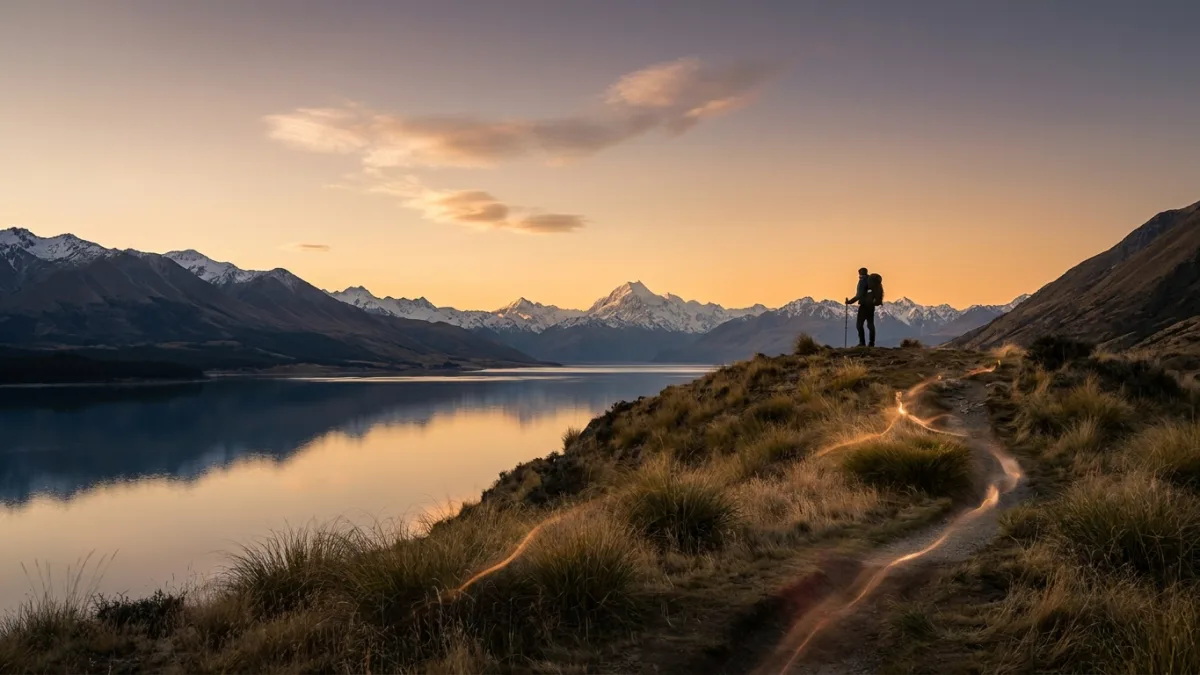

Everything you need to plan your first solo trip to New Zealand, routes, safety, and budget.
Key Facts
Budget NZD $80-$150/day. Drive on the left. Book Great Walks early, popular huts hit 95% occupancy fast.What You'll Gain
A clear route, realistic budget, and the confidence to navigate transport, accommodation, and safety solo.Watch Out
Distances are longer than they look, weather turns fast, and freedom camping requires a certified Green Warrant vehicle from June 2026.
Solo travel in New Zealand sounds daunting until you realize the country is practically built for it. I've pulled together everything that actually matters, from choosing your route to avoiding the mistakes that catch most first-timers out. This guide skips the fluff and gives you the practical stuff you'll use from day one.
Planning Your Solo New Zealand Trip: Where to Start
Traveling New Zealand solo for the first time is absolutely doable, and genuinely one of the best decisions you’ll make.
New Zealand is consistently ranked among the safest and most backpacker-friendly destinations in the world. The infrastructure is excellent, the tourist trail is well-worn, and locals are famously welcoming to independent travelers.
Choose Entry Point
Fly into Auckland or Christchurch first (Queenstown is possible, but not recommended)
Decide Your Route
Pick North, South, or both islands
Set Your Budget
Plan NZD $100-$150 per day minimum
Here’s how to get started before you even pack your bag.
Choose Your Entry Point
Most solo travelers fly into Auckland (North Island) or Christchurch (South Island). Auckland is the most connected hub with the most international flights. Christchurch is ideal if you want to head straight into the South Island’s mountains and fjords.
Think about which island you want to prioritize:
- North IslandGeothermal wonders, Māori culture, beaches, city life
- South IslandFiordland, glaciers, alpine scenery, adventure sports
- BothTotally achievable with 3+ weeks
Decide on a Route
The two most popular solo routes are:
- North Island loop: Auckland → Coromandel → Rotorua → Taupo → Wellington
- South Island loop: Christchurch → Kaikōura → Nelson → West Coast → Queenstown → Milford Sound → Dunedin
Many first-timers do a top-to-bottom route using the Interislander Ferry to cross between islands. This gives you a natural flow without backtracking.
Set a Realistic Budget
New Zealand is not cheap. Budget travelers typically spend between NZD $80-$150 per day covering hostel accommodation, food, transport, and one or two activities. Adventure activities (bungee jumping, skydiving, jet boating) are extra and add up fast.
Getting Around New Zealand Solo
Transport is one of the biggest logistical challenges for solo travelers in New Zealand. The country has limited public transport outside major cities, so your options matter.
Rental Car or Campervan
Renting a car gives you the most freedom. You can stop at hidden viewpoints, take detours, and travel at your own pace. It’s often the most cost-effective option if you’re willing to drive.
- Maximum freedom
- Stop anywhere
- Drive at your pace
- Best for remote areas
- Meet other travelers
- No driving stress
- Flexible hop-on hop-off
- Budget-friendly
Key things to know:
- You drive on the left side of the road
- Many scenic roads are unsealed gravelcheck if your rental covers this
- One-way rentals (e.g., Auckland to Christchurch) are available but may include a relocation fee
- Minimum age for rentals is usually 21, sometimes 25 for campervans
- Using a handheld mobile phone while driving is illegal. According to NZ Transport Agency Waka Kotahi, the penalty is a NZD $150 fine and 20 demerit points. Hands-free use via a fixed mount is permitted.
Campervans are hugely popular with solo backpackers. You save on accommodation costs, but fuel and campsite fees add up.
Important: Freedom camping now requires a certified self-contained vehicle with a Green Warrant. According to the Plumbers, Gasfitters and Drainlayers Board (the official regulator), from 7 June 2026, only vehicles certified with a green warrant are recognised as self-contained and permitted to freedom camp on public land. Vehicles must have a permanently fixed toilet and meet requirements for water supply, wastewater, ventilation, and rubbish storage.
Bus Passes and Hop-On Hop-Off Services
If you don’t want to drive, InterCity and Naked Bus offer nationwide coach services. Stray Travel and Kiwi Experience run hop-on hop-off backpacker buses that are social, flexible, and stop at key tourist spots.
These bus passes are great for:
- Solo travelers who want to meet people
- Those uncomfortable driving on the left
- Budget travelers who don’t want the responsibility of a vehicle
Domestic Flights
New Zealand’s two main domestic airlines (Air New Zealand and Jetstar) connect major cities quickly. A flight from Auckland to Queenstown takes about 2 hours versus 12+ hours by road.
Book early for the best fares. Domestic flights are often surprisingly affordable when booked in advance.
Solo Travel Safety in New Zealand
New Zealand is genuinely safe for solo travelers, including solo female travelers. That said, the country’s wild landscapes present real outdoor risks that catch many visitors off guard.
Respect the Outdoors
New Zealand’s weather is notoriously unpredictable. Mountains can go from sunshine to blizzard in hours. Every year, unprepared trampers get into serious trouble.
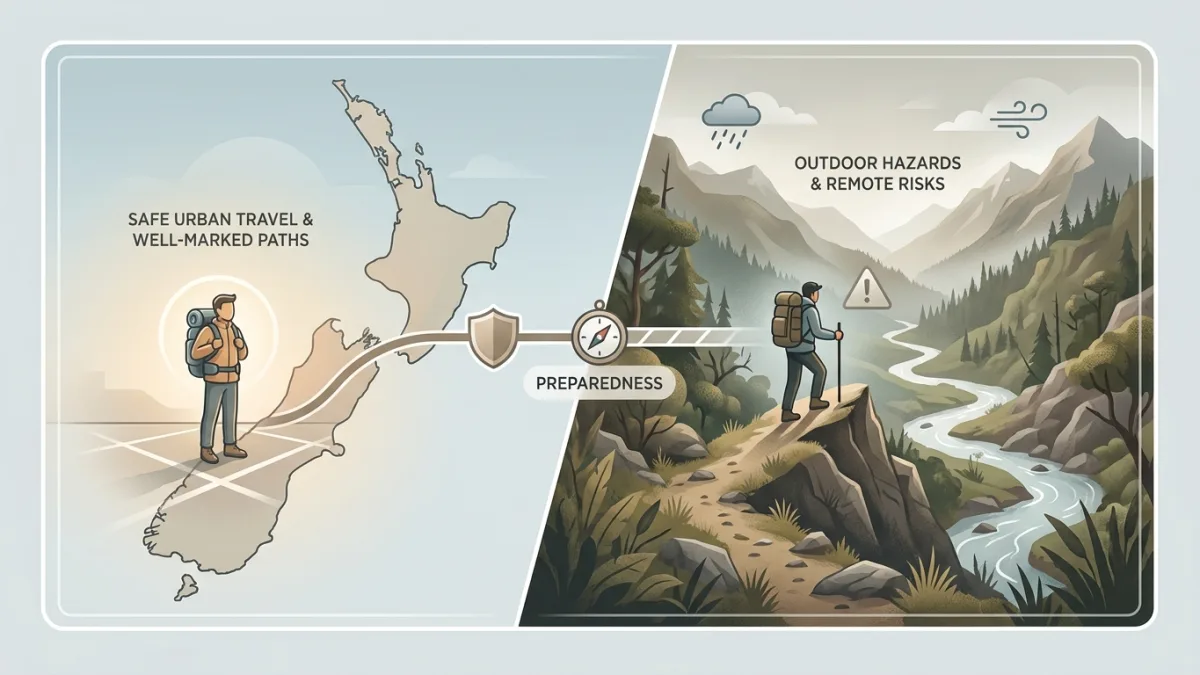
Outdoor Safety Essentials
Always check MetService, register on AdventureSmart, and carry the 10 Essentials before any hike.
Before any hike:
- Check the weather forecast at MetService
- Register your intentions with AdventureSmart (managed by the NZ Search and Rescue Council), this is free and could save your life
- Tell someone where you’re going and when you expect to return
- Carry the 10 Essentials: map, compass, water, food, first aid, rain gear, warm layers, torch, fire starter, and a whistle
New Zealand’s UV index is also a serious concern year-round. According to the Cancer Society of New Zealand, New Zealand ranks alongside Australia with the highest melanoma skin cancer rates in the world. SPF 30+ sunscreen is the minimum recommendedeven on cloudy days, UV rays can cause skin damage within minutes.
Personal Safety in Cities and Towns
New Zealand’s cities are safe by international standards. Standard travel common sense applies:
- Keep valuables out of sight in your car (car break-ins at trailheads do happen)
- Use lockers in hostels for passports and electronics
- Stay aware of your surroundings at night in entertainment districts
- Trust your gut, if something feels off, remove yourself from the situation
Tips for Solo Female Travelers
New Zealand is considered one of the safest destinations in the world for solo female travelers. However:
- Stick to well-lit areas at night in cities
- Use reputable accommodation with good reviews
- Share your itinerary with someone back home
- Join group tours for remote activities if you’re not comfortable going alone
- The backpacker community is incredibly supportive, you’ll rarely feel truly alone in a hostel
Accommodation Options for First-Time Solo Travelers
Where you stay shapes your entire experience as a solo traveler. New Zealand has a fantastic range of options suited to every budget and social preference.
Hostels: The Social Hub
Backpacker hostels (called “backpackers” locally) are the heartbeat of solo travel in New Zealand. They’re affordable, social, and packed with other travelers in the same boat as you.
| Hostel Type | Average Cost (NZD/night) | Best For |
|---|---|---|
| Dorm bed (4 à 6 bed) | $30-$50 | Budget travelers, socializing |
| Dorm bed (8 à 12 bed) | $25-$40 | Ultra-budget, meeting people |
| Private room in hostel | $70-$120 | Privacy + social common areas |
| Haka House (dorm bed) | $35-$60 | Quality, safety, reliability, many locations |
Top hostel chains in New Zealand include YHA, Base Backpackers, and BBH (Budget Backpacker Hostels). BBH membership cards save you money across hundreds of properties.
Holiday Parks and Camping
Holiday parks are uniquely popular in New Zealand. They offer powered sites for campervans, unpowered tent sites, and cabin/unit accommodation, all in one place. Most have communal kitchens, showers, and laundry facilities.
The Department of Conservation (DOC) also runs basic campsites throughout national parks. These are cheap (often NZD $8-$20/night) and spectacularly located. Book through the DOC online booking systemall bookings are first-come, first-served.
Airbnb and Guesthouses
For occasional splurges or when you need a break from hostel life, Airbnb and local guesthouses offer a quieter, more private experience. Great for recharging between social stretches of your trip.
Meeting People and Avoiding Loneliness on the Road
One of the biggest fears first-time solo travelers have is loneliness. In New Zealand, this is rarely a problem, but it helps to be proactive.
Use the Hostel Common Room
The common room and kitchen in any hostel is where connections happen. Cook dinner, ask someone about their route, offer to share a bottle of wine. Conversations start naturally when you’re not staring at your phone.
Most hostels also organize:
- Group dinners or BBQs
- Day trips and activities
- Movie nights and games evenings
Join Group Activities and Tours
New Zealand’s adventure tourism industry is built around group experiences. Even if you book solo, you’ll be doing activities alongside other travelers.
Great social activities include:
- Multi-day hikes (Great Walks like the Tongariro Alpine Crossing or the Milford Track)
- Surf lessons at Raglan or Mount Maunganui
- Wine tours in Marlborough
- Pub crawls in Queenstown or Wellington
Use Apps and Online Communities
Before and during your trip, connect with other travelers:
- Couchsurfing has active meetup events in Auckland, Wellington, and Christchurch
- Facebook groups like “New Zealand Backpackers” are active communities for route advice and meetups
- Meetup.com lists local events and activities open to visitors
Common Mistakes First-Time Solo Travelers Make in New Zealand
Knowing what to avoid is just as valuable as knowing what to do. These are the mistakes that catch out most first-timers.
Underestimating Distances
New Zealand looks small on a map. It isn’t. The country is roughly the same length as the UK, but with far fewer straight roads. Driving times are longer than they lookalways check Google Maps for actual driving duration, not just distance.
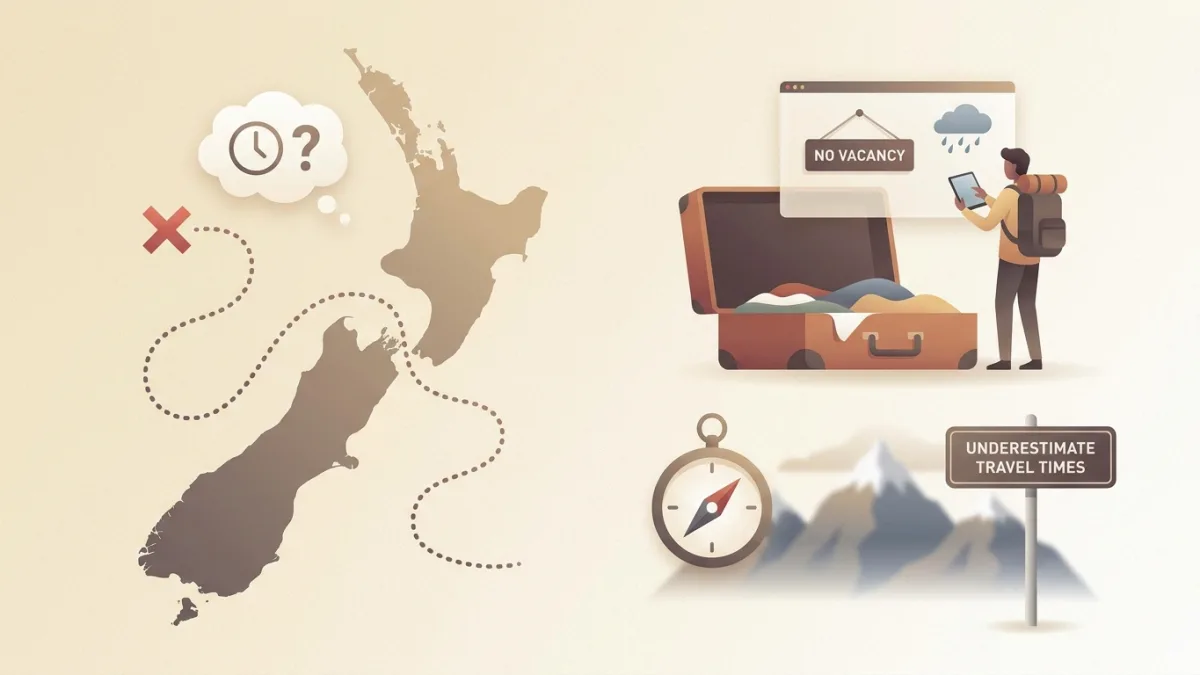
Mistakes to Avoid
5 points- 1 Underestimating driving distances and times
- 2 Not booking Great Walks huts in advance
- 3 Skipping travel insurance for adventure activities
- 4 Overpacking your itinerary, build buffer days
- 5 Missing the Working Holiday Visa if eligible
A common mistake: planning to drive from Auckland to Queenstown in a single day. It’s technically possible but exhausting and pointless, you’d miss everything in between.
Not Booking Ahead for Great Walks
New Zealand’s Great Walks (Milford Track, Routeburn Track, Tongariro Alpine Crossing, etc.) require advance booking, especially in summer. According to DOC, huts and campsites on popular tracks like the Milford Track and Abel Tasman Coast Track reached around 95% occupancy last summer season. Spots sell out within minutes of the booking system opening.
Book through the DOC website as soon as you know your dates. Don’t assume you can just show up.
Ignoring Travel Insurance
New Zealand’s healthcare is not free for tourists. Adventure activities carry real risk. Travel insurance is non-negotiablemake sure your policy covers adventure sports if you plan to bungee jump, skydive, or go white-water rafting.
Overpacking the Itinerary
First-timers often try to see everything. New Zealand rewards slow travel. Rushing from attraction to attraction means you miss the magic of lingering at a hidden beach, chatting with a local farmer, or waking up to mist over a mountain lake.
Build buffer days into your itinerary. You’ll thank yourself when you discover a place you want to stay longer.
Forgetting About the Working Holiday Visa Option
If you’re eligible, New Zealand’s Working Holiday Visa is worth researching before you book a standard tourist visa. According to Immigration New Zealand, working holiday visas are available to young people, normally aged 18 to 30, but 18 to 35 in a select few countriesand generally allow you to travel, work, and study in New Zealand for up to 12 months. Check the INZ website to confirm eligibility for your nationality.
Essential Practical Tips Before You Go
A few logistics that will save you stress on arrival.
SIM Card and Connectivity
Get a local SIM card as soon as you land. Spark, Vodafone NZ, and 2degrees all offer prepaid tourist plans with data. Connectivity is good in cities and towns but limited in remote areas, download offline maps (Maps.me or Google Maps offline) before heading into the backcountry.
Money and Payments
New Zealand is largely cashless. Most places accept Visa and Mastercard. However:
- Some DOC campsite kiosks and remote cafes are cash-only
- ATMs are scarce in small towns, withdraw cash before leaving cities
- Use a travel card or fee-free bank account (like Wise or Revolut) to avoid international transaction fees
Respect for Māori Culture
New Zealand’s indigenous Māori culture is central to the country’s identity, not just a tourist attraction. A few basics:
- Learn a few words of Te Reo Māorilocals genuinely appreciate the effort
- If invited to a marae (meeting ground), follow the protocols you’re given
- Respect tapu (sacred) sites, don’t climb or touch things that are marked as restricted
- Engage with Māori cultural experiences (like a hāngi or kapa haka performance) with genuine curiosity and respect
Our site has more detailed guides on navigating Māori culture respectfully as a visitor, it’s worth reading before you go.
What to Pack for New Zealand
New Zealand’s weather varies dramatically by region and season. Pack for all four seasons in one bag:
- Waterproof jacket (non-negotiable)
- Merino wool base layers (warm, lightweight, odor-resistant)
- Sturdy hiking boots or trail runners
- Sunscreen SPF 50+ according to the Cancer Society of New Zealand, New Zealand has relatively high UV radiation levels and SPF 30+ is the minimum needed for protection. Reapply every two hours. Can be bought locally as well.
- Insect repellent (sandflies in Fiordland and the West Coast are brutal)
- Reusable water bottle (tap water is safe to drink almost everywhere)
- Power adapter (NZ uses Type I plugs, same as Australia)
Frequently Asked Questions
Yes, New Zealand is one of the easiest countries in the world to explore solo. It’s English-speaking, safe, and genuinely built for independent travellers, with great hostels, reliable transport links, and tour operators used to people arriving alone.
The biggest practical challenges aren’t safety-related: they’re things like underestimating drive times on winding roads, or unpredictable weather on hikes. Go in with a loose plan, book the essentials, and you’ll find your rhythm quickly.
The most common mistake is trying to cram too much into too little time. New Zealand looks small on a map, but roads twist and wind, always add extra buffer time to any journey.
Other classic slip-ups include:
- Forgetting to declare food or muddy gear at the border. According to the New Zealand Ministry for Primary Industries (MPI), failing to declare biosecurity risk goods, even by accident, results in an instant NZD $400 infringement fee
- Not booking accommodation in advance during peak summer season (December-February)
- Trusting the weather, New Zealand can serve up four seasons in a single day
- Underestimating the UV index, sunscreen is essential even on cloudy days
New Zealand is widely considered one of the safest destinations in the world for women travelling alone. Street harassment is uncommon and locals are genuinely respectful.
A few practical habits make all the difference:
- Stay in well-reviewed hostels (many offer female-only dorms)
- Share your hiking plans via AdventureSmart before heading out
- Download offline maps for areas with no signal
- Trust your gut, if a campsite or situation feels off, move on
The country’s calm, community-minded vibe makes solo female travel feel natural and empowering.
A few key rules will keep you on the right side of locals, the law, and nature.
- Do declare everything edible or muddy at customs, the MPI confirms the instant fine is NZD $400, with no exceptions
- Do drive on the left, and never use your phone handheld at the wheel, the New Zealand Police confirm the penalty is a $150 fine and 20 demerit points; hands-free use via a fixed mount is permitted
- Do show genuine respect for Māori culture, avoid treating sacred sites as photo ops
- Don’t freedom camp unless your vehicle holds a certified self-contained Green Warrantas of 7 June 2026, this is mandatory for all vehicles used for freedom camping on public land
Hostels are hands-down the easiest way to connect with other travellers. New Zealand has a strong hostel culture across both islands, with communal kitchens, organised tours, and pub crawls that make socialising effortless.
Beyond hostels, joining group day hikes, Māori cultural experiences, or small-group adventure tours are great ways to meet like-minded people. Holiday parks are also surprisingly social, especially in summer when travellers gather around shared barbecue areas.
Not necessarily, but having your own wheels opens up a lot more of the country. InterCity connects most major towns and cities and is a solid budget-friendly option. That said, public transport is limited or non-existent in rural areas, so a rental car or campervan gives you far more flexibility for exploring remote landscapes.
If you’re not comfortable driving on the left, guided tours with transport included are a great alternative, especially for iconic spots like Milford Sound or the Tongariro Alpine Crossing.
Absolutely, travel insurance is strongly recommended, especially when travelling alone. New Zealand’s adventure activities (bungee jumping, skydiving, multi-day hikes) carry real risks, and medical costs without coverage can be significant.
As a solo traveller, there’s no travel companion to help in an emergency. Always carry your policy details and the emergency number: 111the free emergency line for Police, Fire, or Ambulance in New Zealand.
Sources for this article
10

Ask us anything
We run this blog so you can have a great time in New Zealand. All the articles and videos are free for anyone.
If you want to ask an individual question about Newzealand, your working holiday or anything else around travelling New Zealand, then this is your chance.
Even it always looks like holiday, this website and the project is a fulltime business. So you can support us with any question if you'd like.
Simply click the button and ask us, in exchange for your answer you can give what you value our time.
If every visitor would support us with 1€ per year, our business would be up running for long times. Therefore we count on your support!
A big thank you from the depth of our hearts. Julian & the team of Project-Newzealand