Best time of the year to travel New Zealand in a campervan
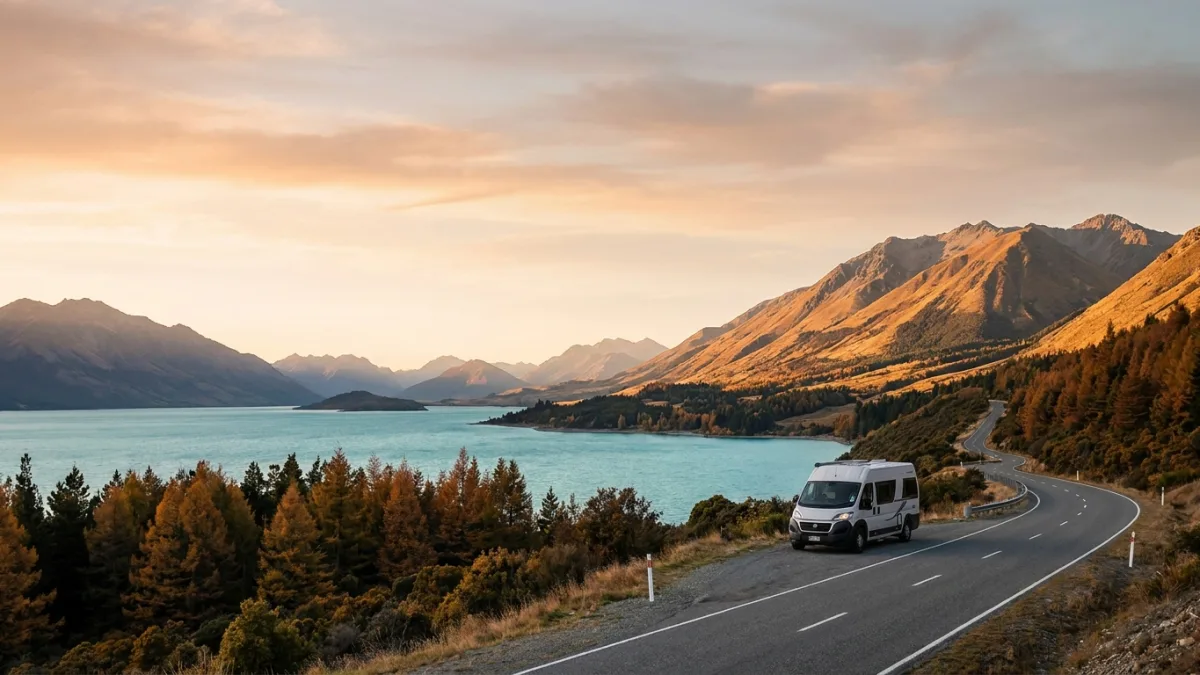

Timing your New Zealand campervan trip right makes all the difference.
Best Overall Window
Late October to April offers reliable weather and full road access. March-April delivers the sweet spot: good conditions, fewer crowds, lower prices.Save Serious Money
Shoulder seasons slash rental costs by 30-40% compared to summer peaks. You'll find available campsites without booking weeks ahead.Winter Limitations
South Island alpine roads close June-August. Many campgrounds shut down. Stick to North Island unless you're targeting ski fields.
Choosing when to explore New Zealand in a campervan isn't just about weather-it's about balancing crowds, costs, and road access. I've broken down each season so you can pick the timing that matches your priorities, whether that's chasing sunshine, saving money, or finding solitude on the open road.
Understanding New Zealand’s Seasons for Campervan Travel
New Zealand’s seasons run opposite to the Northern Hemisphere, which catches many first-time visitors off guard. Summer spans December to February, autumn runs March to May, winter covers June to August, and spring blooms from September to November.
The best time to travel New Zealand in a campervan is from late October to April (spring through autumn). This period offers the most reliable weather, longest daylight hours, and full access to roads and campsites.
- Guaranteed sunshine
- All roads open
- Maximum crowds
- Premium prices
- Lower costs
- Available campsites
- Fewer tourists
- Good weather
Summer (December-February) delivers peak conditions but brings crowds and premium prices, while shoulder seasons (October-November and March-April) balance good weather with fewer tourists and better value.
Your ideal timing depends on three key factors: which island you’re prioritizing, your budget flexibility, and your tolerance for crowds versus solitude. The North Island stays milder year-round, making winter campervan travel feasible. The South Island demands more careful seasonal planning due to harsh winters that close mountain passes and limit camping options.
Peak Season vs Shoulder Season Breakdown
Peak season (December-February) means battling for campsites, booking weeks ahead, and paying higher rates for campervan rentals. You’ll share iconic spots like Milford Sound with thousands of other travelers, but you’ll also get guaranteed sunshine for beach days and reliable conditions for hiking.
Shoulder seasons (October-November and March-April) slash your costs significantly while maintaining decent weather. Campgrounds have space, rental companies offer discounts, and you’ll actually get those Instagram-worthy shots without photobombing tourists. The tradeoff? More unpredictable weather and slightly shorter days.
Winter (June-August) suits only experienced travelers comfortable with challenging conditions. Many South Island roads close, numerous campgrounds shut down, and you’ll need serious cold-weather gear. The North Island remains accessible, but you’ll face rain and limited daylight.
Weather Patterns Across Both Islands
According to Tourism New Zealand, average summer temperatures range from 20-25°C (68-77°F) across the country. The North Island maintains these pleasant temperatures year-round, rarely dropping below 10°C (50°F) even in winter.
Auckland and the Bay of Islands stay pleasantly warm throughout the year, making northern routes viable in any season. Wellington earns its “Windy City” nickname with gusts that can rock your campervan, particularly in spring.
The South Island shows dramatic seasonal swings. Summer temperatures reach 20-30°C (68-86°F) in many areas, with Central Otago experiencing temperatures in the low 30s°C. Winter can plunge to -10°C (14°F) in inland areas. Queenstown and Wanaka become winter wonderlands, but campervan travel becomes genuinely dangerous without proper equipment.
According to official Milford Sound data, the West Coast receives extraordinary rainfall. Milford Sound records a mean annual rainfall of 6,813mm and experiences rain on approximately 182 days per year, making it one of the wettest inhabited places in New Zealand. Pack rain gear regardless of season, and always have a backup plan for outdoor activities.
Regional Climate Variations You Need to Know
Northland and Bay of Islands enjoy subtropical conditions with warm, humid summers and mild winters. This region rarely sees frost, making it your best bet for winter campervan adventures. The beaches stay swimmable from November through April.
Central Otago and Canterbury experience continental climates with hot, dry summers perfect for wine touring and cold winters with frequent snow. Summer temperatures can reach the mid-30s°C, while winter nights drop well below freezing.
Fiordland and the West Coast cop relentless rainfall year-round. The area experiences rain on approximately 182 days per year. Visit during settled high-pressure systems (typically February-March) for your best chance at clear skies, but always expect rain.
Monthly Breakdown for Campervan Travel
Summer Months: December, January, February
December kicks off the holiday rush as Kiwis head to their baches (holiday homes) for Christmas. International tourists flood in simultaneously, creating the year’s busiest period. Temperatures peak, beaches buzz with activity, and every major hiking trail sees heavy foot traffic.
Campervan rental prices hit their absolute maximum-expect to pay significantly more than off-peak rates for a basic 2-berth vehicle, with larger models costing even more. Freedom camping spots fill by mid-afternoon, and holiday parks require bookings weeks in advance.
December
Peak holiday rush begins
January
Best summer weather
February
Crowds thin out
The upside? You get 15+ hours of daylight, minimal rain (except the West Coast), and all attractions operating at full capacity.
January continues the summer peak with slightly less intensity than December. School holidays end mid-month, reducing domestic tourist numbers marginally. This becomes your best summer month for reliable weather and full access to alpine roads like Arthur’s Pass and Haast Pass.
February maintains excellent conditions while crowds begin thinning toward month’s end. Weather remains stable, temperatures stay high, and you’ll start seeing early booking discounts for March. This is prime time for the South Island’s high country and lake districts.
Book your campervan rental 3-6 months ahead for summer travel. Last-minute bookings (within 4 weeks) often face significant price premiums or complete unavailability.
Autumn Months: March, April, May
March delivers the sweet spot many experienced travelers target. Weather stays mostly settled, temperatures remain comfortable (15-22°C/59-72°F), and tourist numbers drop significantly after the first week. Rental prices decrease noticeably, and you’ll find campsites available without advance booking.
The landscape transforms with autumn colors, particularly around Queenstown, Wanaka, and Central Otago. Harvest season brings wine festivals and farmers markets to life. Days shorten to around 12 hours of daylight, giving you plenty of time for activities without the summer rush.
April extends the autumn advantage with even lower prices and fewer tourists. Weather becomes more variable-you’ll see more rainy days but still enjoy plenty of sunshine between systems. This month suits flexible travelers who can adjust plans based on forecasts.
Alpine roads remain open, but start checking conditions before heading into mountain passes. Some Department of Conservation (DOC) campsites close for the season, but holiday parks and commercial campgrounds stay operational.
May marks the transition toward winter. The South Island gets noticeably colder, with snow appearing on mountain peaks and frost becoming common overnight. North Island travel remains pleasant, but the South Island becomes challenging for campervan travel by month’s end.
Winter Months: June, July, August
Winter campervan travel requires serious consideration before committing. The South Island’s alpine regions become inaccessible, with NZTA Journey Planner frequently reporting closures on Milford Road, Arthur’s Pass, and Lewis Pass due to snow and ice. Many freedom camping areas shut down completely.
June through August suits only two types of travelers: those staying exclusively in the North Island, or ski enthusiasts using campervans as mobile accommodation near ski fields. Rental prices drop to their lowest levels, but the savings come with significant limitations.
Daylight shrinks to just 9-10 hours. Temperatures in the South Island regularly drop below freezing overnight, requiring a campervan with effective heating and insulation. Many holiday parks close or operate with limited facilities. DOC campsites largely shut down for the season.
The North Island remains viable during winter, particularly Northland, Coromandel, and the Bay of Plenty. You’ll face more rain and cooler temperatures, but roads stay open and campgrounds continue operating. Auckland’s average winter high of around 15°C (59°F) feels mild compared to the South Island’s conditions.
Spring Months: September, October, November
September signals the awakening but remains unpredictable. Weather swings wildly between beautiful sunny days and cold, wet storms. The South Island stays quite cold, with snow still possible in mountain areas. Tourist infrastructure begins reopening, but some facilities remain closed until October.
October hits the sweet spot for budget-conscious travelers seeking good conditions. Weather improves dramatically, tourist numbers stay low, and rental companies offer competitive rates to fill their fleets before summer. Daylight extends to 13+ hours, giving you ample time for activities.
This month delivers spectacular wildflower displays across the South Island, particularly in the Mackenzie Basin and around Mount Cook. Lambing season fills pastoral landscapes with newborns, and spring blossoms transform gardens nationwide.
November bridges spring and summer perfectly. Weather stabilizes, temperatures climb to comfortable levels (15-20°C/59-68°F), and almost all roads and facilities open for the season. You’ll avoid summer crowds while enjoying near-summer conditions.
Rental prices remain below peak season rates, and you can still find freedom camping spots without competition. This becomes the optimal month for South Island travelroads are clear, weather is improving, and you’ll have the landscapes largely to yourself.
Cost Considerations Throughout the Year
Rental Price Fluctuations
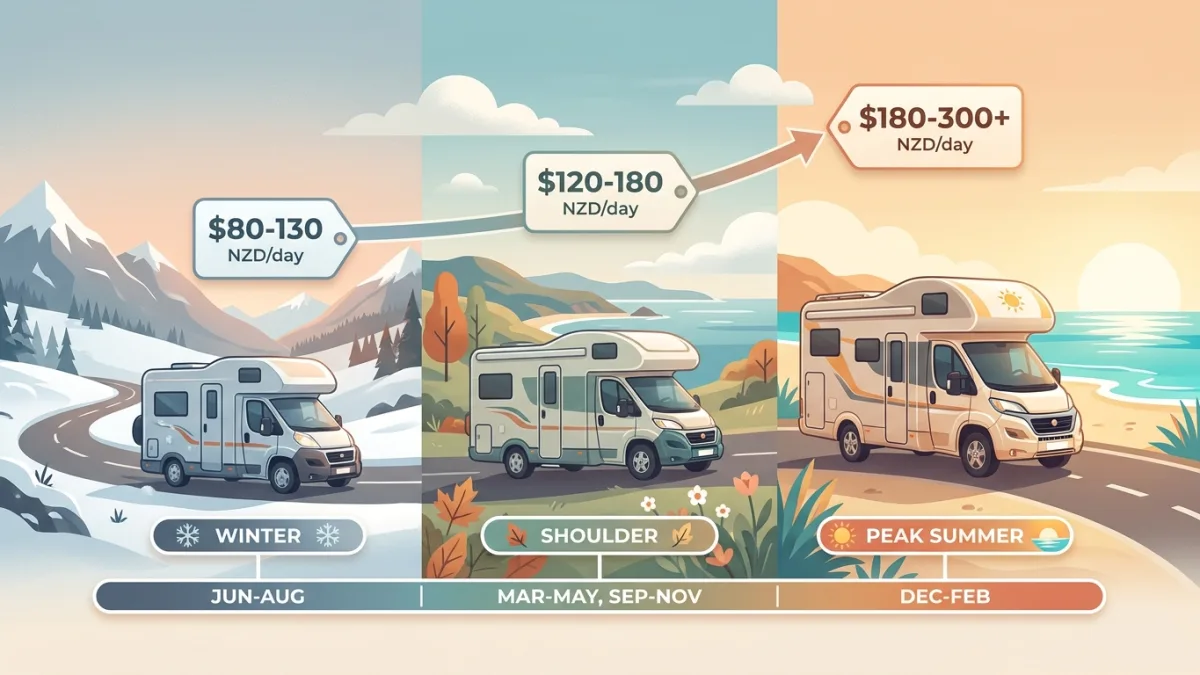
Campervan rental costs swing dramatically based on season. According to 2026 industry data, budget campervans cost around $80-130 NZD per day in winter, $120-180 in shoulder seasons (March-May, September-November), and $180-300+ during peak summer (December-February).
Larger vehicles amplify these differences. A 4-6 berth motorhome might run around $150 NZD daily in winter but surge to $400-600 during Christmas and New Year. Luxury campervans with premium features can exceed $800 per day in peak season.
Winter Travel Warning
Alpine roads close frequently, temperatures drop below freezing, many campgrounds shut down
Booking timing matters enormously. Reserve 4-6 months ahead for summer travel to secure better rates. Last-minute bookings (within 30 days) face availability issues and premium pricing. Conversely, winter and shoulder seasons allow flexibility, with deals often available just weeks before travel.
Rental companies offer relocation deals when they need vehicles moved between cities. These one-way rentals can cost as little as $1-5 per day but come with tight timeframes (usually 3-5 days) and fixed routes. Check websites like TransferCar or contact rental companies directly.
Campground and Fuel Costs
Holiday park rates follow seasonal patterns, though less dramatically than campervan rentals. Expect to pay around $35-60 NZD per night for two people in peak season, dropping to lower rates in shoulder seasons and winter. Powered sites cost more than unpowered sites.
Freedom camping (camping in non-designated areas) is legal in many spots but requires a certified self-contained vehicle. According to the Plumbers, Gasfitters and Drainlayers Board, vehicles must have a fixed toilet, grey water storage, and fresh water tanks to qualify for certification. Non-self-contained camping is increasingly restricted, with fines reaching $200 for violations.
According to the Department of Conservation, DOC serviced campsites offer flush toilets, tap water, kitchen/cooking bench, hot showers, and rubbish collection, with fees of $25 per adult per night for unpowered sites. Standard campsites cost $10-20 per adult per night and have toilets and water supply, while basic campsites are free. Many close from May to September. Book popular DOC sites months ahead for summer.
Fuel costs fluctuate significantly. As of mid-2026, petrol prices have been around $3.50 NZD per liter, though prices vary by region and continue to fluctuate. Diesel campervans pay road user charges (RUC) of $8.40 per 100 kilometers. Budget accordingly for fuel if covering significant distances.
Activity and Attraction Pricing
Tourist attractions maintain consistent pricing year-round, but availability and conditions vary dramatically. Milford Sound cruises run daily in summer but reduce frequency in winter. Many adventure activities like skydiving, bungy jumping, and glacier hikes are weather-dependent and cancel more frequently in shoulder seasons.
Multi-day hiking tracks like the Milford, Routeburn, and Abel Tasman require advance bookings during peak season (October-April), with huts costing varying amounts per person per night depending on the track and season. Winter sees these tracks close or become extremely challenging, requiring mountaineering experience.
Ski fields operate June through October, with lift passes costing around $100-150 per day. Queenstown and Wanaka become winter tourism hubs, with accommodation prices actually increasing during ski season despite being low season for campervan travel.
Restaurant and grocery prices stay consistent, though some tourist-focused eateries in small towns close or reduce hours in winter. Self-catering in your campervan saves substantially-budget accordingly for eating out versus cooking your own meals.
Regional Timing Strategies
North Island Seasonal Advantages
The North Island’s milder climate extends your viable travel window significantly. Winter temperatures rarely drop below 10°C (50°F) in coastal areas, making year-round campervan travel feasible with proper preparation. Auckland, Northland, and the Bay of Plenty remain genuinely pleasant even in July and August.
Coromandel Peninsula shines from December to March when beaches become swimmable and Cathedral Cove accessible. Winter sees heavy rain and rough seas that close coastal walks. Hot Water Beach works year-round, but you’ll dig in comfort during summer versus shivering in winter.
North Island Benefits
5 advantages- 1 Milder climate year-round
- 2 Winter temperatures above 10°C
- 3 Bay of Islands stays warm
- 4 Geothermal attractions work in any weather
- 5 Roads remain open in winter
Rotorua and Taupo function excellently as winter destinations. Geothermal attractions operate regardless of weather, and hot pools feel especially appealing in cold conditions. Ski fields at Mount Ruapehu (June-October) make this region a winter campervan base, though you’ll need chains for mountain roads.
Bay of Islands maintains subtropical warmth year-round, with summer temperatures reaching around 24°C (75°F) and winter rarely dropping below 15°C (59°F). This becomes your best winter escape, offering beach weather when the South Island freezes. Dolphin tours and island cruises run year-round with high success rates.
Wellington’s position creates unique challenges. The capital city experiences strong winds year-round, particularly in spring (September-November) when gusts can be significant. These winds can make driving a high-profile campervan genuinely dangerous. Check forecasts carefully before crossing the Cook Strait or traveling through the Manawatu Gorge.
South Island Seasonal Strategies
The South Island demands careful seasonal planning due to extreme weather variations. Summer (December-February) opens the entire island, but autumn (March-April) offers the best balance of access, weather, and value.
Queenstown and Wanaka transform with seasons. Summer brings hiking, lake activities, and wine touring with long daylight hours. Autumn delivers spectacular foliage and harvest festivals. Winter converts the region into a ski destination with premium prices. Spring sees wildflowers and newborn lambs but unpredictable weather.
West Coast and Fiordland require accepting rain as inevitable. Target February-March for your best weather odds, but pack rain gear regardless. Milford Sound looks dramatic in rain when waterfalls multiply across cliff faces. Book Milford Road accommodation ahead-options are extremely limited.
Canterbury and Mackenzie Basin excel in summer for stargazing (Aoraki Mackenzie Dark Sky Reserve) and alpine activities. Winter brings brutal cold and snow, closing many roads. The Mackenzie Basin’s lupins bloom spectacularly in November-December, creating purple carpets across the landscape.
Marlborough and Nelson offer the sunniest weather in New Zealand, averaging 2,400+ hours of sunshine annually. This region works well year-round, though winter (June-August) gets cold overnight. Abel Tasman National Park is accessible year-round but most enjoyable October-April when you can kayak and swim.
The Southern Scenic Route from Queenstown to Dunedin via Te Anau and the Catlins is best traveled December-March. Winter conditions make this route challenging, with limited services and accommodation closing for the season.
Weather Patterns and Road Conditions
Managing New Zealand’s Changeable Weather
New Zealand weather changes rapidly and unpredictably, particularly in mountainous areas. Forecasts become unreliable beyond 2-3 days, and conditions can shift from sunshine to storms within hours. This volatility affects campervan travel significantly, requiring flexibility in your plans.
MetService provides the most reliable forecasts, with specific mountain pass and highway warnings. Check forecasts daily, particularly before driving alpine routes. The Mountain Weather service offers detailed predictions for high-country areas, crucial for planning South Island travel.
Best Season Strategy
Shoulder seasons (October-November and March-April) offer the best balance of access, weather, and value for most travelers.
Based on weather patterns and cost analysisFrontal systems typically move west to east, meaning the West Coast cops weather first before it crosses the Southern Alps. A storm hitting Hokitika will likely reach Christchurch 6-12 hours later. Use this pattern to anticipate conditions and adjust routes accordingly.
Wind poses a serious hazard for high-profile vehicles like campervans. Strong crosswinds on exposed highways (particularly State Highway 1 through Canterbury and State Highway 6 along Lake Wakatipu) can push campervans across lanes or even tip them. If winds are strong with significant gusts, consider delaying travel or taking alternative routes.
Critical Road Conditions by Season
Alpine passes close regularly in winter and even occasionally in shoulder seasons. According to NZ Transport Agency Waka Kotahi, Arthur’s Pass, Lewis Pass, Milford Road, and Crown Range Road all require chains during winter and can close completely during heavy snow. Real-time road condition updates are available on their website.
Milford Road (State Highway 94) presents unique challenges. This stunning route through Fiordland closes frequently for avalanche control, weather, and maintenance. Rain is common at Milford Sound throughout the year, creating dramatic waterfalls. The road is most reliably open December-March but can close any time of year.
Summer driving conditions are generally excellent, with all roads open and well-maintained. However, summer also brings increased tourist traffic, particularly on popular routes like the road to Mount Cook, Milford Sound, and around Queenstown. Expect slow-moving traffic and limited parking at attractions.
Gravel roads remain common in rural and remote areas, particularly in Northland, Coromandel, and parts of the South Island’s interior. Most rental agreements prohibit or restrict gravel road travel. Check your contract carefully, as insurance may not cover damage on unsealed roads.
Daylight Hours Impact
Daylight hours swing dramatically between summer and winter, affecting how much you can accomplish daily. Summer (December-January) provides 15+ hours of daylight, with sunrise around 5:30 AM and sunset after 9:00 PM in southern regions. This extended daylight lets you drive longer distances and fit multiple activities into one day.
Winter (June-July) shrinks daylight to just 9-10 hours, with sunrise around 7:30 AM and sunset by 5:00 PM. This limitation compresses your daily travel window significantly, particularly problematic when combined with slower winter driving conditions and road closures.
Shoulder seasons offer 12-13 hours of daylight, providing a reasonable window for activities without the extreme compression of winter. Autumn (March-April) maintains comfortable daylight hours while offering better weather than spring (September-October).
Driving at night in rural New Zealand presents hazards beyond limited visibility. Possums, rabbits, and occasionally deer cross roads frequently, creating collision risks. Avoid driving after dark when possible, particularly on unfamiliar roads.
Comparing Seasons: Detailed Breakdown
| Season | Temperature Range | Crowds | Road Access | Best For |
|---|---|---|---|---|
| Summer (Dec-Feb) | 20-30°C (68-86°F) | Very High | Full access | Beaches, hiking, guaranteed weather |
| Autumn (Mar-May) | 10-20°C (50-68°F) | Low-Moderate | Full until May | Budget travel, autumn colors, wine touring |
| Winter (Jun-Aug) | 0-15°C (32-59°F) | Very Low | Limited South Island | North Island exploration, skiing |
| Spring (Sep-Nov) | 10-18°C (50-64°F) | Low-Moderate | Opens progressively | Wildflowers, baby animals, value |
Summer: Maximum Access, Maximum Cost
Summer delivers guaranteed access to every corner of New Zealand with the most reliable weather. All roads stay open, every campground operates, and activities run at full capacity. You’ll get the longest days, warmest temperatures, and best conditions for swimming, hiking, and outdoor adventures.
The downside? Everyone else has the same idea. Popular spots like Lake Tekapo, Queenstown, and Abel Tasman become genuinely crowded. Freedom camping spots fill by early afternoon, holiday parks require advance booking, and rental prices peak. You’ll pay significantly more than winter rates for the same campervan.
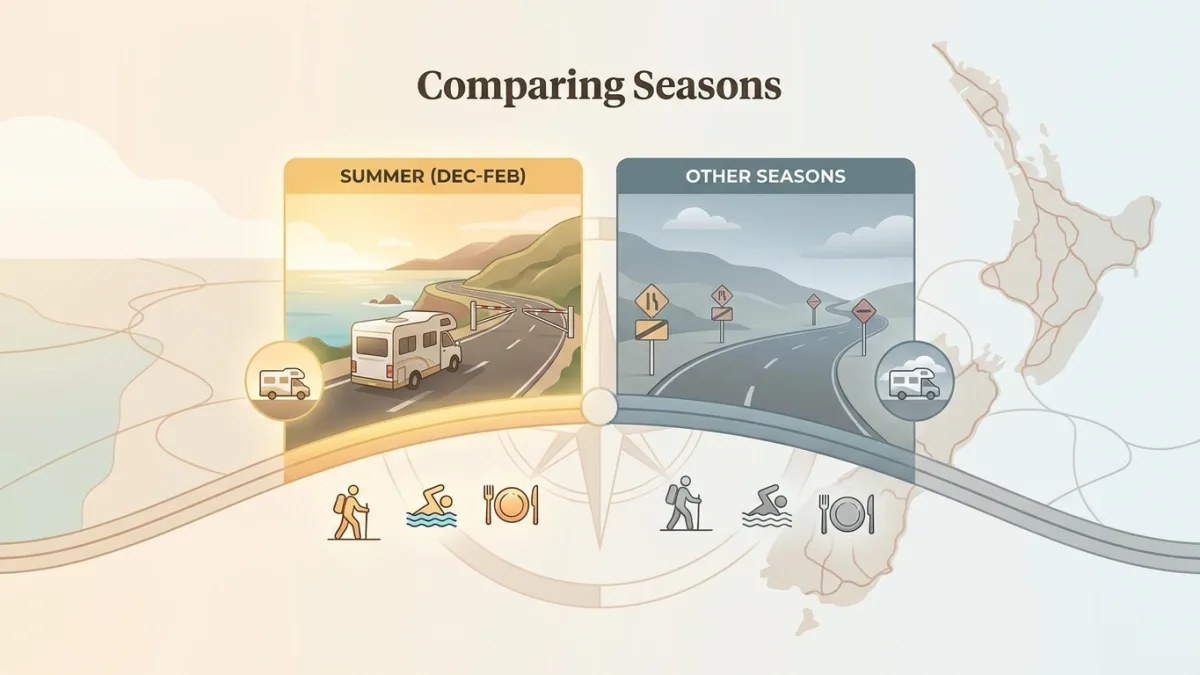
Traffic increases noticeably on key tourist routes. The drive from Queenstown to Milford Sound, typically 4 hours, can stretch to 5+ hours during peak times due to slow-moving campervans and tourist traffic. Parking at attractions becomes competitive, with popular spots like Hooker Valley Track and Roy’s Peak filling by 8 AM.
Christmas and New Year (Dec 20-Jan 10) represent the absolute peak within peak season. Kiwis take their summer holidays, combining with international tourists to create maximum demand. Book everything months ahead or expect to pay premium prices and face limited availability.
Autumn: The Connoisseur’s Choice
Autumn earns its reputation as the best overall season for campervan travel. Weather remains mostly settled, temperatures stay comfortable, and tourist numbers drop significantly after early March. You’ll pay considerably less than summer rates while maintaining excellent travel conditions.
The landscape transforms spectacularly, particularly in Central Otago and around Queenstown. Autumn foliage rivals New England’s famous displays, with golden poplars and red maples creating stunning backdrops. Wine regions celebrate harvest with festivals and tastings, and farmers markets overflow with fresh produce.
March offers the sweet spot-summer weather with autumn prices and crowds. April extends these advantages with even fewer tourists but slightly less reliable weather. May transitions toward winter, remaining viable in the North Island but becoming challenging in the South Island’s alpine regions.
Limitations emerge gradually through autumn. Days shorten noticeably by May, some DOC campsites close for the season, and weather becomes more variable. Alpine roads remain open but require monitoring forecasts, particularly toward May when early snow becomes possible.
Winter: For the Adventurous or Budget-Conscious
Winter campervan travel suits specific use cases rather than general tourism. If you’re staying in the North Island, targeting ski fields, or prioritizing rock-bottom prices over optimal conditions, winter works. Otherwise, it presents significant challenges.
South Island winter travel requires experience with cold-weather camping and winter driving. Temperatures regularly drop below freezing overnight, demanding a well-insulated campervan with effective heating. Many rental companies restrict winter travel to the North Island or require additional insurance for South Island journeys.
Alpine roads close frequently, limiting your route options dramatically. Milford Road typically closes multiple times per winter for avalanche control. Arthur’s Pass and Lewis Pass require chains and can close completely during storms. The Crown Range Road between Queenstown and Wanaka closes regularly for snow and ice.
North Island winter remains genuinely viable, particularly Northland and the Bay of Islands. You’ll face more rain and cooler temperatures, but roads stay open and conditions remain manageable. Auckland’s winter temperatures feel mild compared to southern regions.
The ski season (June-October) creates a unique winter niche. Queenstown and Wanaka become winter tourism hubs, with campervans serving as affordable accommodation near ski fields. Expect to pay more in these regions despite it being low season elsewhere.
Spring: Unpredictable but Rewarding
Spring delivers spectacular natural displays at bargain prices but demands flexibility for weather. Wildflowers carpet the South Island’s high country, lambs fill pastoral landscapes, and gardens burst into bloom. You’ll pay shoulder season rates while enjoying increasing daylight and warming temperatures.
September remains quite cold and unpredictable, particularly in the South Island. Snow is still possible in mountain areas, and weather swings wildly between sunny days and cold, wet storms. Tourist infrastructure begins reopening, but some facilities remain closed until October.
October improves dramatically, with weather stabilizing and temperatures climbing. This month offers excellent value-near-summer conditions at shoulder season prices. Lupins bloom spectacularly in the Mackenzie Basin, creating purple carpets that attract photographers from worldwide.
November bridges spring and summer perfectly. Weather approaches summer reliability, temperatures reach comfortable levels, and almost all facilities open for the season. You’ll avoid summer crowds while enjoying near-summer conditions. This becomes arguably the single best month for South Island campervan travel.
Spring’s main limitation is weather unpredictability. A perfect sunny week can be followed by cold, rainy days. Pack layers and have backup plans for outdoor activities. The upside? Flexibility and patience get rewarded with spectacular conditions at fraction of summer costs.
Practical Planning Recommendations
Matching Season to Your Travel Style
Beach and water activities demand summer (December-February) or late spring (November). Water temperatures peak in January-February, making swimming, snorkeling, and kayaking genuinely comfortable. Abel Tasman, Bay of Islands, and Coromandel beaches work best during these months.
Hiking and tramping work best in shoulder seasons (October-November and March-April). Summer’s heat can make long hikes uncomfortable, particularly in Central Otago where temperatures exceed 30°C (86°F). Autumn and spring offer comfortable hiking temperatures with fewer people on popular tracks.
Wine touring peaks during harvest (March-April) when wineries celebrate with festivals and special events. Marlborough, Hawke’s Bay, and Central Otago wine regions offer tastings year-round, but autumn provides the most engaging experience with harvest activities and autumn colors.
Wildlife viewing varies by species. Whales migrate past Kaikoura June-August (winter), while dolphins appear year-round with highest numbers in summer. Penguin colonies at Oamaru and Dunedin are accessible year-round, but breeding season (September-February) offers the most activity.
Photography benefits from autumn’s golden light and dramatic landscapes. Spring wildflowers create spectacular foregrounds for South Island mountain shots. Summer’s long days provide extended shooting windows, but harsh midday light can be challenging. Winter offers snow-covered landscapes but limited daylight.
Booking Timeline and Flexibility
Summer travel (December-February) requires booking 4-6 months ahead for best selection and pricing. Popular campervans sell out completely during Christmas and New Year periods. Last-minute summer bookings (within 30 days) face significant price premiums and severely limited options.
Shoulder seasons (March-May, September-November) allow more flexibility, with 6-12 weeks advance booking sufficient for good selection. Prices remain relatively stable, and last-minute deals occasionally appear as rental companies seek to fill their fleets.
Winter (June-August) offers maximum flexibility with bookings possible just 1-2 weeks ahead. Rental companies actively discount to maintain utilization, making this the best time for spontaneous travel-if you can handle the weather limitations.
Consider one-way rentals to maximize efficiency. Flying into Christchurch and out of Auckland (or vice versa) eliminates backtracking and lets you experience both islands without retracing routes. One-way fees typically add $200-500 NZD but save days of driving and fuel costs.
Essential Gear by Season
Summer camping requires sun protection (high UV levels in New Zealand), insect repellent (sandflies are vicious, particularly on the West Coast), and light layers for temperature variations. A portable fan helps in hot campervans without air conditioning.
Autumn and spring demand versatile layering systems. Temperatures swing 15-20°C between day and night, requiring warm jackets for mornings and evenings but light clothing for midday. Waterproof gear is essential-rain can appear any time in shoulder seasons.
Winter camping needs serious cold-weather equipment: sleeping bags rated to -5°C or lower, thermal clothing, and multiple layers. Many campervans lack adequate heating for South Island winter temperatures. Consider electric blankets if your campervan has shore power hookup capability.
Year-round essentials include sandfly repellent (particularly for West Coast and Fiordland), a first aid kit, torch/flashlight, and portable phone charger. Download offline maps-cell coverage is limited in rural areas. Carry extra food and water for remote regions where services are sparse.
According to SunSmart New Zealand, New Zealand has approximately 40% higher UV radiation levels than countries at similar latitudes in the Northern Hemisphere. Sunburn happens quickly even on overcast days. Pack high-SPF sunscreen and reapply frequently.
Sample Itineraries by Season
Summer 3-week South Island loop: Christchurch → Lake Tekapo → Mount Cook → Queenstown → Milford Sound → Wanaka → West Coast → Nelson → Christchurch. This classic route works perfectly December-February with all roads open and maximum daylight.
Autumn 2-week North Island circuit: Auckland → Coromandel → Rotorua → Lake Taupo → Tongariro National Park → Wellington → return via Hawke’s Bay wine region. Comfortable temperatures, autumn colors, and wine harvest activities make this ideal for March-April.
Spring 10-day South Island highlights: Queenstown → Wanaka → Mount Cook → Lake Tekapo → Christchurch. This condensed route captures the best of the South Island during November’s wildflower season while avoiding winter road closures and summer crowds.
Winter North Island escape: Auckland → Bay of Islands → return via Coromandel. This short loop focuses on the warmest regions, keeping travel manageable during short winter days while avoiding the South Island’s harsh conditions.
Frequently Asked Questions
A minimum of 5 days is recommended for a worthwhile campervan trip, allowing you to explore one or two destinations comfortably. With 10 days, you can explore one island in depth or venture across both islands, while 14 days or more is ideal to truly immerse yourself in everything New Zealand offers. The longer your trip, the more flexibility you’ll have to discover hidden gems and adjust your route.
The cheapest months to fly are typically May, June and August, with June often offering the lowest fares during the winter off-season. Travelling outside peak summer means lower campervan rental rates, cheaper accommodation, and fewer crowds at popular spots. Shoulder seasons of March to April and September to November also offer good value with more pleasant weather.
There is no defined rainy season, however the rainiest period is winter from June to August. Rainfall is distributed uniformly throughout the year in most parts, with northern and eastern areas seeing a slight winter maximum. Rain can occur year-round across the country, with regional variations depending on topography and location.
Absolutely, New Zealand is exceptional for campervan travel. The country offers over 300 DOC campsites in stunning locations, with many basic sites available for free. Council campsites provide excellent infrastructure with flush toilets, running water and dump stations. Just ensure your vehicle is certified self-contained to access the best freedom camping spots.
Late January to early March is the best time, when summer holidays end and crowds thin but weather stays warm and dry. Shoulder seasons of March to April or October to November offer pleasant weather with lower costs than peak summer. January to March are the warmest months with long daylight hours.
Self-contained certification is required for most freedom camping areas. Your vehicle must contain a fixed toilet, sealed wastewater tanks, fresh water for at least three days, and an evacuation hose. Vehicles without certification can only camp in designated areas. Most rental companies offer certified campervans, so confirm this when booking.
Costs vary significantly by season and vehicle type. Campervan rentals range from approximately $80-130 NZD per day in winter to $180-300+ in peak summer. DOC campsites range from free to around $25 per adult per night, while council campsites typically cost $6-18 per adult. Budget by factoring in campervan rental, fuel, campground fees, and groceries for cooking your own meals to maximize savings.
Sources for this article
10

Ask us anything
We run this blog so you can have a great time in New Zealand. All the articles and videos are free for anyone.
If you want to ask an individual question about Newzealand, your working holiday or anything else around travelling New Zealand, then this is your chance.
Even it always looks like holiday, this website and the project is a fulltime business. So you can support us with any question if you'd like.
Simply click the button and ask us, in exchange for your answer you can give what you value our time.
If every visitor would support us with 1€ per year, our business would be up running for long times. Therefore we count on your support!
A big thank you from the depth of our hearts. Julian & the team of Project-Newzealand